7778 Vance Dr. Arvada, CO 80003
Observing a feline companion move through their environment with fluid grace and effortless precision is a joy every cat owner cherishes. Cats rely on a sophisticated combination of keen vision, sensitive whiskers, and spatial memory to leap onto perches, navigate quiet hallways, and hunt play toys. However, when a cat suddenly begins pausing nervously before stepping onto rugs, misjudging jump distances, or bumping into living room furniture, the unexpected shift can leave pet parents deeply concerned.
Unlike subtle, age-related optical changes that allow cats time to adapt by leaning more heavily on hearing and scent, acute loss of eyesight happens rapidly. Cat owners searching online for dependable vets near me need prompt diagnostic answers to understand the physiological shifts occurring behind their feline’s eyes. Seeking urgent pet care ensures clinical teams can evaluate ocular structures, identify underlying systemic triggers, and initiate immediate treatments to protect remaining sight. For cat owners residing in Arvada, recognizing the early warning signs of feline visual distress helps ensure your companion receives gentle, effective medical support when they need it most.
Primary Underlying Causes of Sudden Feline Blindness
Acute loss of eyesight in cats rarely occurs without a significant underlying pathological mechanism. Because feline visual pathways are linked closely to vascular and metabolic systems, sudden visual impairment often signals internal health shifts.
Systemic Hypertension and Retinal Detachment
High blood pressure, or systemic hypertension, is one of the most frequent causes of sudden vision loss in older felines. Often developing secondary to chronic kidney disease or hyperthyroidism, elevated blood pressure strains fragile blood vessels in the back of the eye. This pressure causes fluid or blood to leak beneath the retina, forcing the light-sensitive retinal layer to peel away from supporting tissue structures.
Feline Uveitis and Internal Inflammation
Uveitis is severe inflammation affecting the middle vascular layer of the eye, known as the uvea. Triggered by infectious agents, immune-mediated conditions, or systemic inflammatory diseases, severe uveitis causes protein debris and inflammatory cells to cloud the fluid inside the eye chamber, blocking light from reaching the back of the retina.
Acute Glaucoma and Pressure Spikes
While less common in felines than in canine companions, acute glaucoma occurs when internal fluid drainage pathways become blocked. Intraocular fluid pressure spikes rapidly, placing mechanical pressure on delicate optic nerve fibers and causing swift visual impairment alongside intense ocular headaches.
Sudden Optic Neuritis
Optic neuritis involves direct inflammation or swelling of the optic nerve that carries visual signals from the eye to the brain. When this neural pathway becomes inflamed due to infectious or central nervous system shifts, light signals can no longer register properly in the brain.
Observing Behavioral and Physical Signs at Home
Distinguishing between minor behavioral hesitation and true optical loss requires watching for subtle physical cues alongside spatial confusion.
- Mild Variations (Safe for Short-Term Observation):
- Minor, clear watery tearing following quiet rest in a dusty area
- Slight, transient eye squinting that disappears completely after brief rest
- Intact navigational confidence across both brightly lit and dark indoor rooms
- Equal pupil constriction when transitioning between sunlit perches and shaded rooms
- Acute Indicators Requiring Intermediate Medical Attention:
- Sudden spatial disorientation, misjudging couch leaps, or bumping into doorways
- Fully dilated, wide pupils that remain large even under direct, bright indoor lights
- Hazy bluish film, cloudiness, or visible blood accumulation inside the eye chambers
- Relentless face pawing, frequent head shaking, or keeping one eye tightly shut
- Uncharacteristic vocalizing, deep hiding in dark closets, or sudden fearfulness
Point-of-Care Diagnostics During Urgent Vet Care Visits
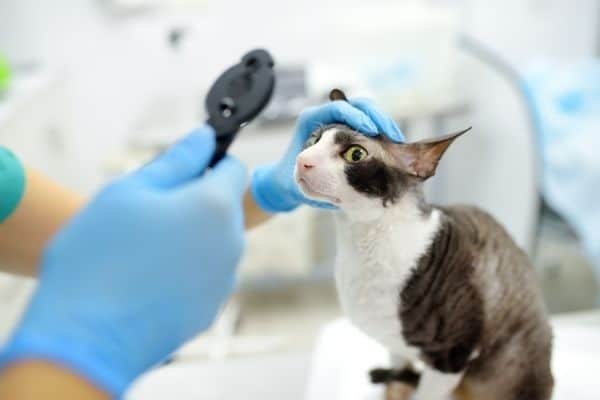
When you bring your cat in for clinical evaluation regarding sudden optical shifts, veterinary teams employ gentle point-of-care tools to inspect eye structures and systemic health without delay.
- Ophthalmic Tonometry Measurement: Uses a delicate electronic probe to measure internal fluid pressure quickly and painlessly, checking for pressure spikes associated with glaucoma.
- Indirect Ophthalmoscopy Examination: Provides high magnification to evaluate lens clarity, inspect retinal alignment, and check for active vascular bleeding or retinal detachment.
- Systemic Blood Pressure Screening: Measures arterial blood pressure using a soft cuff placed around a leg or tail to identify underlying hypertension instantly.
- Fluorescein Stain Application: Uses a temporary specialized dye that adheres to damaged corneal tissue, ruling out surface scratches or ulcers.
Combining rapid diagnostic feedback with pet-safe anti-hypertensive medications, anti-inflammatory therapies, or pressure-regulating drops halts discomfort and offers your cat the best opportunity to recover functional sight.
Supporting Feline Companions Across Arvada
Protecting your cat’s visual health requires attentive daily care, maintaining a safe indoor environment, and staying mindful of subtle changes in behavior. Inspecting your cat’s eyes during daily petting sessions allows you to spot minor cloudiness, pupil asymmetry, or redness before mobility is affected.
If you are from Arvada and looking for urgent vet care, taking fast action at the first sign of optical haze, cloudiness, or sudden spatial confusion provides your cat with the best opportunity for a smooth, complete recovery.
Providing timely medical attention preserves your companion’s quality of life, protects their health, and offers complete peace of mind for your entire household.
Taking Action for Your Cat’s Visual Comfort
When your cat exhibits sudden navigational changes, eye cloudiness, or physical discomfort, securing a prompt evaluation keeps their recovery moving in the right direction. You can schedule an online appointment through our portal to reserve a convenient time for your pet to be examined by our medical staff.
If your companion is actively displaying uncomfortable eye symptoms or sudden optical changes and you prefer to speak directly with our clinical staff before arriving, please call our team at 303-420-4422 so we can offer immediate guidance and prepare for your visit.
Our dedicated medical team looks forward to delivering gentle, expert care for your companion at Indian Tree Animal Hospital.
Frequently Asked Questions
Q1. Can a cat adapt to sudden blindness safely within the home?
Ans: Yes. Cats possess extraordinary adaptive abilities relying on their acute sense of hearing, smell, and sensitive whiskers. Once any underlying medical pain or blood pressure issues are controlled through clinical treatment, most cats learn to navigate familiar household layouts smoothly as long as furniture remains in consistent locations.
Q2. Is sudden blindness in cats ever reversible?
Ans: Whether vision loss is reversible depends on the underlying cause and how quickly clinical treatment begins. For example, if retinal detachment caused by high blood pressure is diagnosed early, prompt anti-hypertensive medication can allow the retina to reattach and restore partial or full vision.
Q3. Why do a blind cat’s pupils remain widely dilated?
Ans: When the retina or optic nerve fails to transmit light signals to the brain, the automatic reflex that constricts the pupil in response to light is interrupted. As a result, the pupils remain fully open in an effort to absorb light, failing to constrict even under bright illumination.
Q4. How can I keep my home safe for a cat experiencing sudden vision loss?
Ans: Keep daily feeding stations, water bowls, and litter boxes in fixed locations. Block access to open staircases with safety gates, avoid rearranging living room furniture, and move sharp objects or low glass table edges out of your cat’s primary walking paths.
Q5. How should I safely transport a cat experiencing sudden visual changes to the clinic?
Ans: Keep your vehicle quiet, cool, and well-ventilated to minimize anxiety. Place your cat inside a soft, padded carrier lined with familiar blankets. Drape a light towel loosely over the carrier to block overwhelming visual stress and carry the carrier smoothly without sudden tilting.