
7778 Vance Dr. Arvada, CO 80003
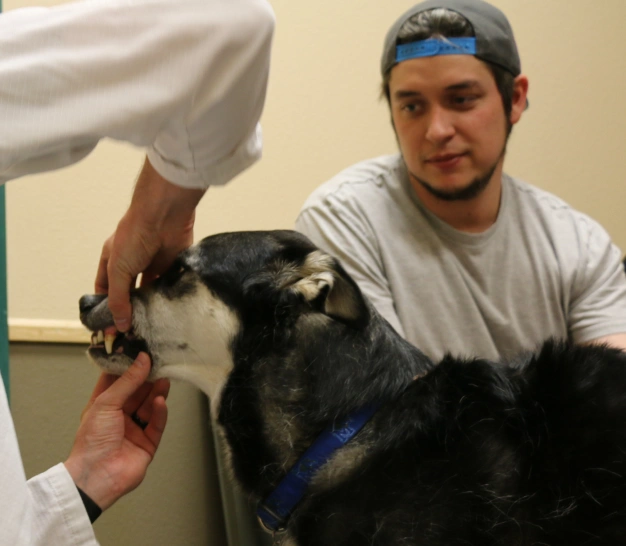
Dental Examinations
All of us can understand the importance of dental care for their pets, because the risk of gingivitis and periodontal disease is the same for animals as it is for people. There is no reason to believe that animals do not feel the same pain of sore gums and a toothache that we feel. So, the main reason to care for your pet’s teeth is to prevent pain.
If you never brushed your teeth, your mouth would be sore and you would have trouble eating. You might feel tired all the time because the infection in your mouth would spread throughout your body. The exact same thing happens in your pet’s mouth. The mouth is the door to the rest of the body. It has a very good immune system to protect it against the constant barrage of bacteria and toxins it deals with every minute. But it needs some help. We must keep it clean of the plaque that is constantly forming on the teeth.
Plaque is a clear, thick substance consisting of saliva, bacteria, and food particles. In fact, plaque is 80% bacteria and forms within 6-8 hours after brushing. It sticks to the teeth and collects in the pockets around the teeth. If not removed, an infection will result. This infection will eventually overwhelm the body’s immune system.
Signs of gingivitis and periodontal disease:
- Bad Breath
- Drooling
- Difficulty chewing or eating
- Vomiting
- Gums swollen or red, may bleed
- Brownish-yellow calculus (tartar) on teeth
- Receded Gums
- Loose or missing teeth
Dental Cleaning
Dental calculus (tartar) is composed of various mineral salts, organic material and food particles. In the early stages of accumulation, the material is soft (plaque), but it later hardens and adheres to the teeth. Continual accumulation causes inflammation of the gums and eventual recession of the gums and loose teeth. The breath becomes very odorous, and the mouth becomes a dangerous source of infection.
Untreated tooth and gum disease may allow bacteria to enter the bloodstream and cause damage to the valves of the heart.
Regular professional cleaning is the most effective way to ensure good dental health for your pet. Your veterinarian will exam your pet’s entire oral cavity including teeth, gums, tongue, soft palate, and cheeks. Performing dental radiographs (x-rays) is essential in examining the oral cavity in determining tooth health below the gum line.
Dental Care at Home
Maintain your pet’s professional cleaning by brushing your pet’s teeth daily. Your veterinarian can provide special enzymatic toothpaste developed for the teeth of cats and dogs. Abrasive dental cleaning pads are also helpful in cleaning the teeth. Water and baking soda can be used with a soft toothbrush but are less effective than toothpaste developed for animals.